

Discover Ubuntu’s latest security enhancement: TPM-backed Full Disk Encryption (FDE). This experimental feature in Ubuntu 23.10 offers improved data protection without the need for passphrases

The search, analytics, and database communities are buzzing with excitement as the countdown to OpenSearchCon 2023 begins. This second annual conference will be a 3-day event in Grand Sheraton Seattle on 27-29 September. This year’s conference program is divided into four tracks to reflect the community’s interests in search, analytics,
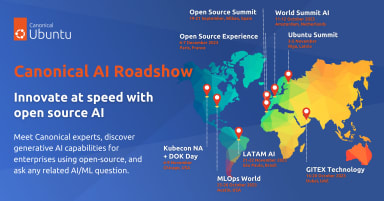
Series of events will highlight generative AI use cases powered by open source software London, UK. 6 September 2023. Canonical, the publisher of Ubuntu, is launching its first AI roadshow. The series of events and presentations will highlight how enterprises can make better use of their own data and make artificial intelligence (AI) use

Any data-centric organisation faces the prospect of data growth at some point in their existence; it is estimated that more than 2,500 Petabytes (PB) of new data is created every day. While only a few organisations will ever have to deal with that kind of scale, it is important to plan ahead for your own

Few creatures from mythology have captured the imagination of mankind quite like the legendary Minotaur. A half-man, half-bull behemoth that is said to guard the halls of the impenetrable labyrinth of Crete. The ancient sagas stated that only the bravest of warriors would be able to match its incredible strength and escape its mystifying

오늘날 급변하는 디지털 환경에서 강력한 도커 컨테이너 보안 조치의 중요성은 아무리 강조해도 지나치지 않습니다. 컨테이너화된 계층도 규정 준수 표준의 적용을 받기 때문에 보안 문제 및 규정 준수 요구 사항이 발생합니다. 도커 컨테이너 보안 조치는 경량의 어플라이언스 유형 컨테이너(각 캡슐화 코드 및 해당 종속성)를 위협 및 취약성으로부터 보호하는 것을 수반합니다. 민감한 개인 데이터를 처리하는 데 의존하는
The Australian Federal Government is not alone in dealing with challenges like natural disasters, global pandemics and economic uncertainty. Like many governments, they are looking for new and innovative ways to tackle these challenges. FST Government 2023 is an exciting conference that brings over 200 government leaders together to explo
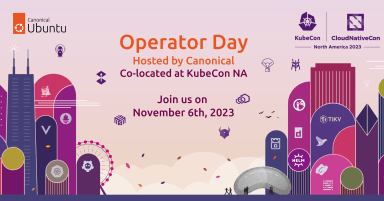
The 7th Operator Day is a virtual event and will take place on the first day of the KubeCon week, Monday, 6 November 2023. The event is entirely virtual. You can dial in from anywhere and attend. You can register at the KubeCon NA 2023 conference or directly at the event page.

Newsletter signup
An overview at what’s new in LXD 5.16 and 5.17 releases.

The Linux kernel has recently introduced the Rust programming language as an alternative to C for creating kernel modules. Rust is a strongly, statically typed programming language with a focus on memory safety features which produces extremely compact executable code. These properties, paired with its good tooling, make Rust a natural ch
We are excited to celebrate all things open source at the upcoming Open Source Summit Europe 2023 in the beautiful city of Bilbao, Spain. The event will take place on 19-21 September. The summit serves as a reminder of the open source movement’s ongoing significance, fostering a space where attendees can explore the latest trends,

Large language models (LLMs) are the topic of the year. They are as complex as they are exciting, and everyone can agree they put artificial intelligence in the spotlight. Once LLms were released to the public, the hype around them grew and so did their potential use cases – LLM-based chatbots being one of them.
Explore Ubuntu Pro’s role in the AWS Shared Responsibility Model plus walk through a real-world example to install your own Mastodon server on Ubuntu Pro Deploying your application on a public cloud offers numerous benefits, including improved time to market, elastic capacity, and improved baseline security compared to on-premises solutio

New federal compliance rules meant that NMSU Physical Science Laboratory needed a new operating system. Learn more about why they chose Ubuntu.

From pure voice to data, and now with the connectivity provided to devices and machines, telco systems make it possible to deliver digital services to society. Thanks to telecom systems, we can keep in touch with each other and reach the information sources we need at any time and anywhere. As we have become increasingly

In this post we share our values and vision for Ubuntu Desktop, and how this framework can help structure and support our collaboration with the community.
Ubuntu tech blog
Deep dives for developers
Visit the Ubuntu Tech Blog for deep dives into product features, step-by-step tutorials, and the latest updates from Canonical's engineering teams.